Weight Loss Surgery in Mexico vs Turkey: Costs, Hospitals & Results (2026)
By Travel4Treatment Medical Team
Why Mexico and Turkey Dominate Weight Loss Surgery Tourism
For patients considering bariatric surgery abroad, two destinations consistently rise to the top: Mexico and Turkey. Together, these two countries perform hundreds of thousands of weight loss procedures for international patients each year, offering savings of 75-85% compared to the United States while maintaining quality standards that rival — and in many cases equal — top US bariatric centers.
But which destination is better for your specific situation? The answer depends on where you're traveling from, which procedure you need, your budget, and your comfort preferences. This comprehensive comparison breaks down everything you need to know to make an informed decision.
For patients from the United States, Mexico offers the advantage of proximity — many border-city clinics are just a short drive or flight away. For patients from the United Kingdom and Europe, Turkey is typically more convenient with direct flights from most major cities.
Types of Weight Loss Surgery Available
Both Mexico and Turkey offer the full range of bariatric procedures. Understanding the differences is critical to choosing the right procedure:
Gastric Sleeve (Sleeve Gastrectomy)
The most popular bariatric procedure worldwide, accounting for approximately 60% of all weight loss surgeries globally.
- How it works: Approximately 75-80% of the stomach is permanently removed, leaving a narrow "sleeve" or tube-shaped stomach about the size of a banana.
- Weight loss: Patients typically lose 60-70% of excess weight within 12-18 months.
- Advantages: Simpler procedure than bypass, no intestinal rerouting, no foreign body (unlike lap band), fewer nutritional deficiencies than bypass, shorter surgery time (45-90 minutes).
- Considerations: Irreversible (stomach is removed, not just modified), does not address malabsorption, may have less effect on type 2 diabetes reversal than bypass.
- BMI requirement: Generally recommended for patients with BMI 30-40+ (some clinics accept BMI 27+ with comorbidities).
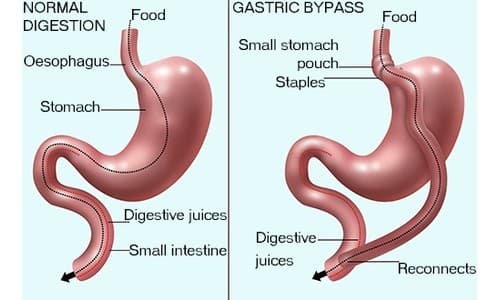
Gastric Bypass (Roux-en-Y)
The "gold standard" of bariatric surgery with the longest track record of published research.
- How it works: A small pouch is created from the top of the stomach and connected directly to the small intestine, bypassing most of the stomach and the first part of the small intestine. This creates both restriction (smaller stomach) and malabsorption (fewer calories absorbed).
- Weight loss: Patients typically lose 70-80% of excess weight within 12-18 months.
- Advantages: Greater weight loss than sleeve for many patients, higher rate of type 2 diabetes remission (up to 80%), strong "dumping syndrome" discourages sugar/fat consumption, longest published outcomes data.
- Considerations: More complex surgery (longer operating time), higher risk of nutritional deficiencies (lifelong vitamin supplementation required), potential for internal hernias, more difficult to reverse.
- BMI requirement: Generally recommended for patients with BMI 35+ or BMI 30+ with obesity-related comorbidities.
Mini Gastric Bypass (One Anastomosis Gastric Bypass)
A simplified version of the traditional Roux-en-Y bypass that is gaining popularity, particularly in Turkey.
- How it works: Creates a long, narrow stomach pouch connected to the small intestine with a single connection point (anastomosis), rather than the two connection points in traditional bypass.
- Weight loss: Comparable to traditional bypass (70-80% of excess weight).
- Advantages: Shorter surgery time than traditional bypass, technically simpler (one connection vs two), potentially reversible, strong metabolic effects on diabetes.
- Considerations: Newer procedure with less long-term data, potential for bile reflux, requires lifelong nutritional monitoring.
Cost Comparison: Mexico vs Turkey vs US/UK
Here's the detailed cost breakdown for the most common bariatric procedures:
| Procedure | Mexico | Turkey | USA | UK (Private) |
|---|---|---|---|---|
| Gastric Sleeve | $4,000-$6,000 | $3,500-$5,500 | $15,000-$25,000 | £8,000-£12,000 |
| Gastric Bypass (Roux-en-Y) | $5,500-$8,000 | $4,500-$7,000 | $20,000-$35,000 | £10,000-£15,000 |
| Mini Gastric Bypass | $5,000-$7,000 | $4,000-$6,500 | $18,000-$30,000 | £9,000-£13,000 |
| Revision Surgery | $6,000-$9,000 | $5,500-$8,500 | $25,000-$45,000 | £12,000-£18,000 |
| Gastric Sleeve + Body Contouring | $7,000-$10,000 | $6,000-$9,000 | $30,000-$50,000 | £15,000-£25,000 |
Important notes on pricing:
- Prices in Mexico and Turkey are typically all-inclusive packages (surgery, hospital, hotel, transfers). US and UK prices are for the surgery only — add accommodation, aftercare, and other costs separately.
- Turkey tends to be slightly cheaper than Mexico, particularly for bypass procedures, due to the favorable Turkish Lira exchange rate.
- Neither destination offers financing as commonly as US bariatric centers, though some clinics in both countries now partner with medical financing companies.
Mexico: Pros, Cons & What to Expect
Advantages of Mexico
- Proximity to the US: Tijuana is a 20-minute drive from San Diego. Cancun and Mexico City have direct flights from most US cities. No jet lag for American patients.
- Established bariatric industry: Mexico has been a top bariatric tourism destination for 15+ years. Surgeons in Tijuana and Guadalajara have performed thousands of procedures on US patients specifically.
- US-trained surgeons: Many top Mexican bariatric surgeons trained or completed fellowships at US institutions. They speak fluent English and understand American patient expectations.
- Quick turnaround: Many US patients drive to Tijuana border clinics for a 3-4 day trip. Fly-in patients typically spend 4-5 days total.
- Cultural familiarity: For US patients, Mexico is culturally accessible — English is widely spoken in medical tourism zones, the food is familiar, and the time zone difference is minimal.
Disadvantages of Mexico
- Quality variation: Mexico has a wider range of clinic quality than Turkey. The gap between top-tier and budget clinics is significant. Research is essential.
- Limited accreditation: Fewer Mexican bariatric clinics hold JCI accreditation compared to Turkish hospitals. Look for clinics accredited by Mexico's General Health Council (CSG) at minimum.
- Distance for non-US patients: For UK, European, or Middle Eastern patients, Mexico offers no geographic advantage over Turkey and involves longer flights.
- Safety concerns: While medical tourism zones are generally safe, some patients have concerns about traveling to certain regions. Border cities like Tijuana are safe for medical tourists but require awareness.
Typical Mexico Package Timeline (5 Days)
| Day | What Happens |
|---|---|
| Day 1 | Arrive. Airport/border transfer. Check into hotel or clinic accommodation. Pre-operative tests (blood work, EKG, chest X-ray). Surgeon consultation and final assessment. |
| Day 2 | Surgery day. Gastric sleeve: 45-90 minutes. Gastric bypass: 90-150 minutes. Laparoscopic (keyhole) approach. Hospital overnight stay. |
| Day 3 | Post-op day 1. Leak test (upper GI study or methylene blue test). If clear, begin sipping clear liquids. Walk the hallways. Second night in hospital. |
| Day 4 | Discharge from hospital. Transfer to hotel for recovery. Continue liquid diet. Rest and gentle walking. |
| Day 5 | Final check-up at clinic. Discharge instructions, prescriptions, and diet plan provided. Airport transfer or drive home. |
Turkey: Pros, Cons & What to Expect
Advantages of Turkey
- Hospital infrastructure: Turkey's top bariatric hospitals are large, JCI-accredited, multi-specialty facilities — not standalone clinics. Hospitals like those in our partner network have full ICU capabilities, 24/7 specialist coverage, and comprehensive emergency departments.
- Price advantage: Turkey is typically 10-20% cheaper than Mexico for equivalent procedures due to the favorable Turkish Lira exchange rate.
- Comprehensive packages: Turkish bariatric packages tend to be more comprehensive — often including 3-5 star hotel stays, all meals during hospital stay, dietitian consultations, and 12-month post-op nutritional support program.
- Proximity to UK/Europe: Istanbul is 3.5 hours from London, 3 hours from most European capitals. For UK patients avoiding NHS wait times, Turkey is the most convenient high-quality destination.
- Regulatory oversight: Turkey's Ministry of Health actively regulates medical tourism, licensing facilities specifically for international patients and conducting regular inspections.
- Combined procedures: Turkey excels at combining bariatric surgery with later body contouring procedures (tummy tuck, arm lift, thigh lift) as part of a weight loss transformation journey.
Disadvantages of Turkey
- Distance from the US: Istanbul is a 10+ hour flight from the US East Coast. For American patients, this means more travel time, jet lag, and higher flight costs compared to Mexico.
- Language barrier (for some): While English is spoken at medical tourism hospitals, Turkish is the primary language outside the hospital. Patient coordinators bridge this gap, but it's more pronounced than in Mexico for US patients.
- Return trips: If a follow-up visit is needed, the distance from the US makes this more expensive and time-consuming than returning to Mexico.
- Cultural adjustment: For patients unfamiliar with Turkish culture, there may be a greater adjustment period than with Mexico (for US patients).
Typical Turkey Package Timeline (6-7 Days)
| Day | What Happens |
|---|---|
| Day 1 | Arrive Istanbul. VIP airport transfer. Check into partner hotel. Rest and recover from travel. |
| Day 2 | Hospital admission. Full pre-operative workup: blood tests, EKG, chest X-ray, abdominal ultrasound, pulmonary function test. Surgeon consultation. Dietitian meeting. Anesthesiologist assessment. |
| Day 3 | Surgery day. Procedure performed laparoscopically. Hospital stay begins. |
| Day 4 | Post-op day 1. Leak test. Begin clear liquids if cleared. Walk with assistance. Pain managed by the surgical team. |
| Day 5 | Post-op day 2. Continue recovery in hospital. Advance to full liquids. Dietitian provides post-op nutrition plan. |
| Day 6 | Discharge from hospital. Transfer back to hotel. Rest day with clinic on call. Post-op care kit provided. |
| Day 7 | Final check-up at hospital. Discharge documentation. Prescriptions. Diet schedule for next 6 months. Airport transfer and departure. |
Hospital Quality Comparison
This is where the two destinations differ most significantly:
| Factor | Mexico | Turkey |
|---|---|---|
| JCI Accreditation | Limited (few clinics) | Widespread (many hospitals) |
| Facility Type | Often standalone bariatric clinics or small hospitals | Typically large multi-specialty hospitals |
| ICU Availability | Varies by facility | Standard in most bariatric hospitals |
| Surgeon Volume | Top surgeons: 500-1,500+ per year | Top surgeons: 500-2,000+ per year |
| Hospital Stay | 1-2 nights typical | 2-3 nights typical |
| Post-Op Nutritional Support | Varies; some offer programs | Often included: 6-12 month dietitian follow-up |
| Leak Test | Standard at top clinics | Standard at all reputable hospitals |
Neither destination is universally "better" — but the profile is different. Mexico offers more clinic-style experiences with a quick turnaround, while Turkey offers more hospital-grade experiences with longer stays and more comprehensive packages.
BMI Requirements and Pre-Operative Preparation
Both destinations have similar clinical requirements, though some clinics vary:
- Minimum BMI: Most clinics require BMI 30+ for gastric sleeve and BMI 35+ for gastric bypass. Some accept BMI 27+ with documented comorbidities (type 2 diabetes, sleep apnea, hypertension).
- Pre-op diet: Most surgeons require a 2-4 week liquid or low-carb diet before surgery to shrink the liver, making the procedure safer and easier.
- Medical clearance: Patients with cardiac conditions, severe sleep apnea, or liver disease may need additional clearance from specialists before surgery is approved.
- Psychological assessment: Some clinics (more common in Turkey) include a psychological evaluation to ensure the patient understands the lifelong dietary changes required.
- Smoking: Most surgeons require patients to quit smoking at least 4 weeks before surgery. Smoking dramatically increases complication risk.
Post-Operative Diet and Lifestyle
Regardless of whether you choose Mexico or Turkey, the post-operative journey is the same:
Diet Progression
| Phase | Duration | What You Can Eat |
|---|---|---|
| Clear liquids | Days 1-3 | Water, broth, sugar-free jello, herbal tea |
| Full liquids | Days 4-14 | Protein shakes, yogurt, cream soups (strained), milk |
| Pureed foods | Weeks 3-4 | Blended lean meats, hummus, scrambled eggs, mashed vegetables |
| Soft foods | Weeks 5-8 | Ground meats, fish, soft vegetables, soft fruits, cheese |
| Regular foods | Week 9+ | Normal diet (small portions) — protein first, vegetables second, carbs last |
Expected Weight Loss Timeline
| Timeframe | Gastric Sleeve | Gastric Bypass |
|---|---|---|
| Month 1 | 15-25 lbs | 20-30 lbs |
| Month 3 | 30-45 lbs | 40-55 lbs |
| Month 6 | 50-70 lbs | 60-85 lbs |
| Month 12 | 70-100 lbs | 85-120 lbs |
| Month 18 | 80-120 lbs (plateau) | 100-150 lbs (plateau) |
Note: These figures are for patients starting with BMI 40-45. Individual results vary based on starting weight, adherence to diet and exercise, metabolism, and other factors. Both procedures achieve comparable long-term success when patients follow their nutrition and exercise plans.
Success Rates and Long-Term Outcomes
Published research shows comparable outcomes for bariatric procedures at accredited facilities worldwide:
- Excess weight loss at 5 years: Gastric sleeve 55-65%, Gastric bypass 65-75%
- Type 2 diabetes remission: Gastric sleeve 60-70%, Gastric bypass 75-85%
- Hypertension improvement: 65-80% for both procedures
- Sleep apnea resolution: 75-90% for both procedures
- Mortality rate: 0.1-0.3% (comparable to gallbladder removal — one of the safest surgeries performed)
The key success factor is not which country you choose, but: the surgeon's experience and volume, the hospital's accreditation and protocols, and your commitment to the lifelong dietary and lifestyle changes required after surgery.
Which Destination Is Right for You?
Choose Mexico if:
- You live in the United States, particularly in southern or western states
- You want the shortest possible trip (3-5 days)
- You prefer cultural familiarity and easy English communication
- You might need to return for follow-up and want minimal travel
- You're comfortable with a clinic-style experience
Choose Turkey if:
- You live in the UK, Europe, or the Middle East
- You prefer a large hospital setting with full ICU and multi-specialty backup
- You want the most comprehensive all-inclusive package
- You want the lowest possible cost
- You're interested in combining bariatric surgery with later body contouring
- You value JCI accreditation and regulatory oversight
Get a Free Bariatric Surgery Consultation
Ready to take the next step? Travel4Treatment can help you compare options in both Mexico and Turkey — we work with vetted surgeons in both destinations and will help you find the right fit based on your medical profile, budget, and preferences.
- Share your current weight, height, medical history, and goals
- Receive personalized recommendations for procedure type and destination within 48 hours
- Compare 2-3 surgeon/hospital options with detailed package breakdowns
- Get answers to all your questions — no obligation, no pressure
Contact us today for a free consultation. Your weight loss journey starts with a single conversation.
Related Resources
Ready to Get Started?
Free consultation | Response within 24 hours | No obligation