Cochlear Implants in Thailand
Save up to 60%Compare hospitals and planning costs for your treatment in Thailand. Our care team helps coordinate hospital selection, travel and follow-up. No service fees for patients.
Planning range: $8,000–$15,000
Planning estimate, not a hospital quote. Confirm the procedure, inclusions, and current price with our care team.
Request my treatment estimate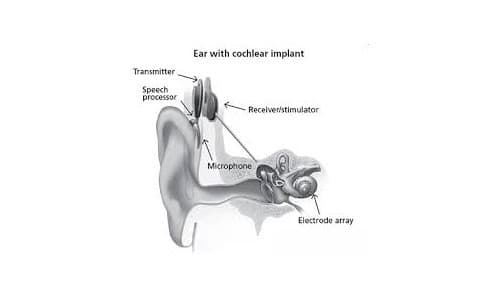
About Cochlear Implants
Electronic devices that provide a sense of sound to people with severe hearing loss.
Cost of Cochlear Implants in Thailand
Thailand
$8,000 – $15,000
US reference range
$20,000 – $40,000
Estimated savings
Up to 60%
Hospitals for Cochlear Implants in Thailand
With Travel4Treatment vs. On Your Own
Coordinating treatment abroad alone takes weeks. We handle every step — at zero cost to you.
Free. No service fees. Ever.
With Travel4Treatment
- Free consultation with a dedicated case manager
- Vetted JCI-accredited hospitals matched to your case
- Doctor's written second opinion before you travel
- Visa invitation letter and embassy guidance
- On-the-ground translator on day of admission
- Insurance liaison and claim documentation help
- 24/7 WhatsApp support before, during, and after
- Post-treatment follow-up coordinated with local doctor
On Your Own
- Hours of research, no expert to ask
- Guesswork on which hospital to trust
- Pay $300–$1,000 for an independent second opinion
- Visa rejections common without medical letter
- Communication breakdowns at critical moments
- Reimbursement claims often denied for missing paperwork
- Time-zone gaps when something goes wrong
- Discharge papers in a foreign language, no follow-up plan
We're paid by partner hospitals — never by patients. Your quote is the hospital's quote, end-to-end.
Patient information by country
Explore existing country guides for travel planning and questions to discuss with our care team.
Before you choose a hospital
Ask for an itemized estimate covering the procedure, hospital stay, tests and medicines. Confirm separately what is included for accommodation, travel, a companion and follow-up. Your treating team should confirm suitability, recovery and travel timing for your case.
Frequently Asked Questions
Who is eligible for a cochlear implant?
Cochlear implants are suitable for adults and children with severe to profound sensorineural hearing loss in both ears who receive limited benefit from hearing aids. Candidates undergo a thorough audiological evaluation, medical examination, and imaging studies. Children as young as 12 months can receive cochlear implants, and early implantation is recommended to support speech and language development.
What does the rehabilitation process after cochlear implantation involve?
After the surgical site heals, usually within 2 to 4 weeks, the external processor is activated and programmed by an audiologist. Rehabilitation includes regular auditory therapy sessions to help the brain learn to interpret the new signals. The process varies by individual but typically takes 3 to 12 months for adults and may be longer for young children. Consistent practice and follow-up appointments are essential for optimal outcomes.
How long do I need to stay abroad for cochlear implant surgery?
Most patients should plan for a stay of 3 to 4 weeks abroad. This includes preoperative audiological evaluation and imaging (2 to 3 days), the surgery itself (1 day with overnight stay), healing time before device activation (2 to 4 weeks), and the initial activation and programming session. Some patients choose to return home after surgery and schedule the activation with a local audiologist, which can reduce the abroad stay to 7 to 10 days.
What are the risks of cochlear implant surgery?
Cochlear implant surgery is generally safe with a low complication rate. Potential risks include infection at the surgical site, dizziness or balance problems (usually temporary), tinnitus, facial nerve stimulation causing tingling, and in rare cases, device failure requiring reimplantation. Meningitis risk is slightly elevated, which is why vaccination before surgery is recommended. Experienced ENT surgeons perform this procedure routinely with excellent safety records.
Can adults who have been deaf for many years benefit from a cochlear implant?
Adults who lost their hearing after acquiring speech (post-lingual deafness) generally achieve good results even after many years of deafness, as the auditory pathways in the brain retain the ability to process sound. However, adults with pre-lingual deafness (deaf from birth or early childhood) may have more limited outcomes, as the brain's auditory cortex may not have fully developed for sound processing. A thorough evaluation by the cochlear implant team will help set realistic expectations.