Interventional Radiology in India
Save up to 75%Compare hospitals and planning costs for your treatment in India. Our care team helps coordinate hospital selection, travel and follow-up. No service fees for patients.
Planning range: $5,000–$10,000
Planning estimate, not a hospital quote. Confirm the procedure, inclusions, and current price with our care team.
Request my treatment estimate
About Interventional Radiology
Minimally invasive image-guided procedures, including TIPPS for liver patients.
Cost of Interventional Radiology in India
India
$5,000 – $10,000
US reference range
$20,000 – $40,000
Estimated savings
Up to 75%
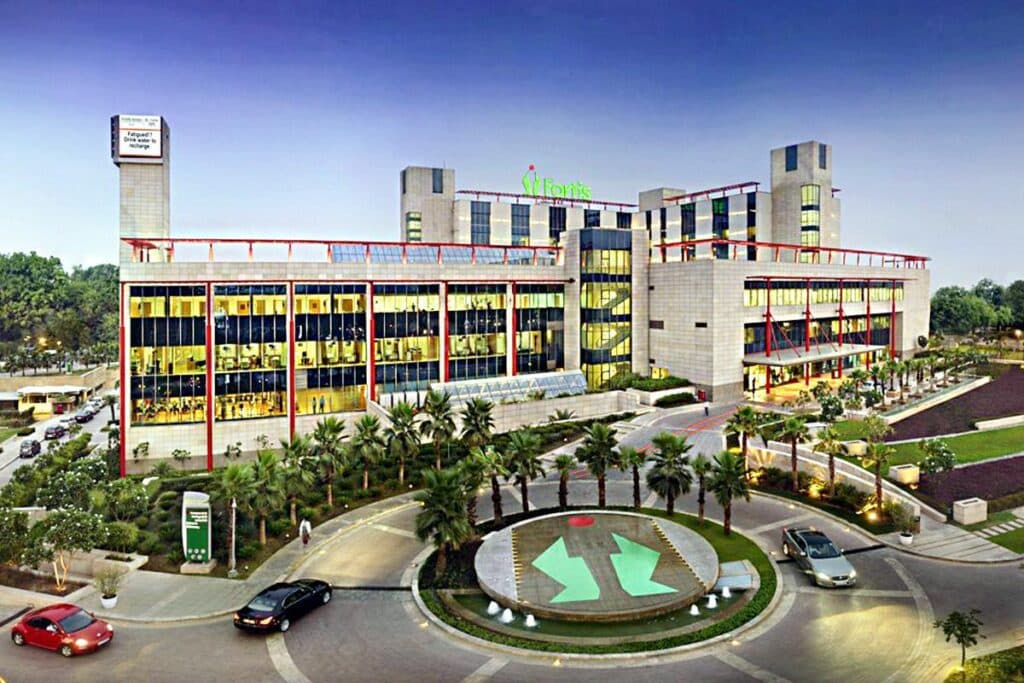
Hospitals for Interventional Radiology in India




With Travel4Treatment vs. On Your Own
Coordinating treatment abroad alone takes weeks. We handle every step — at zero cost to you.
Free. No service fees. Ever.
With Travel4Treatment
- Free consultation with a dedicated case manager
- Vetted JCI-accredited hospitals matched to your case
- Doctor's written second opinion before you travel
- Visa invitation letter and embassy guidance
- On-the-ground translator on day of admission
- Insurance liaison and claim documentation help
- 24/7 WhatsApp support before, during, and after
- Post-treatment follow-up coordinated with local doctor
On Your Own
- Hours of research, no expert to ask
- Guesswork on which hospital to trust
- Pay $300–$1,000 for an independent second opinion
- Visa rejections common without medical letter
- Communication breakdowns at critical moments
- Reimbursement claims often denied for missing paperwork
- Time-zone gaps when something goes wrong
- Discharge papers in a foreign language, no follow-up plan
We're paid by partner hospitals — never by patients. Your quote is the hospital's quote, end-to-end.
Patient information by country
Explore existing country guides for travel planning and questions to discuss with our care team.
Before you choose a hospital
Ask for an itemized estimate covering the procedure, hospital stay, tests and medicines. Confirm separately what is included for accommodation, travel, a companion and follow-up. Your treating team should confirm suitability, recovery and travel timing for your case.
Frequently Asked Questions
What conditions can interventional radiology treat in cancer patients?
Interventional radiology offers a wide range of treatments for cancer patients, including tumor ablation (using radiofrequency, microwave, or cryotherapy), chemoembolization (TACE) and radioembolization (TARE/Y-90) for liver tumors, port-a-cath placement for chemotherapy access, drainage of fluid collections, biliary stenting for obstructive jaundice, and TIPS procedures for portal hypertension in patients with liver disease. These image-guided techniques often serve as alternatives to open surgery, with shorter recovery times and fewer complications.
How long is the recovery after an interventional radiology procedure?
Recovery from interventional radiology procedures is generally much shorter than from traditional surgery. Most procedures require only a small puncture site rather than a surgical incision. Patients typically stay in the hospital for observation for 1 to 2 days, with many simpler procedures performed on an outpatient basis. Post-procedure discomfort is usually mild and managed with oral pain medication. Most patients can resume light activities within 3 to 5 days and are cleared to travel home within a week. Your interventional radiologist will provide specific recovery guidance based on the procedure performed.
How does interventional radiology compare to traditional surgery for tumor treatment?
Interventional radiology offers a minimally invasive alternative to surgery for certain tumors, with significantly less pain, shorter hospital stays, and faster recovery. While surgery physically removes the tumor, interventional techniques destroy tumors in place using heat, cold, or targeted radiation. These methods are particularly effective for patients who are not candidates for surgery due to age, comorbidities, or tumor location. In some cases, interventional radiology can be combined with surgery for comprehensive treatment.
Is interventional radiology available for non-cancer conditions?
Yes, interventional radiology treats many non-cancer conditions including uterine fibroids (through uterine artery embolization), varicose veins, deep vein thrombosis, peripheral arterial disease, chronic pain management through nerve blocks, and benign prostatic hyperplasia. The minimally invasive nature of these procedures makes them an attractive option for patients seeking faster recovery and less scarring compared to traditional surgery.
What qualifications should I look for in an interventional radiologist abroad?
Look for an interventional radiologist who is fellowship-trained in interventional radiology, has extensive experience with the specific procedure you need, and practices at a hospital with JCI or equivalent accreditation. The facility should have state-of-the-art imaging equipment including digital subtraction angiography and CT-fluoroscopy. Ask about the physician's case volume for your specific condition, as higher volumes are associated with better outcomes and fewer complications.